









“A Microscopy-Powered Adventure Across Materials, Industries, and Failure Mechanisms”
Areas of Analytical Expertise
“If it exists in a lab, a factory, a coating line, a fiber mill, or a hydrogen pipeline — I’ve probably analyzed it.”
My analytical work spans polymers, coatings, adhesives, construction chemicals, fibers, textiles, nonwovens, paper, packaging, metals, alloys, composites, films, pigments, fillers, powders, bio-materials, and hybrid structures.
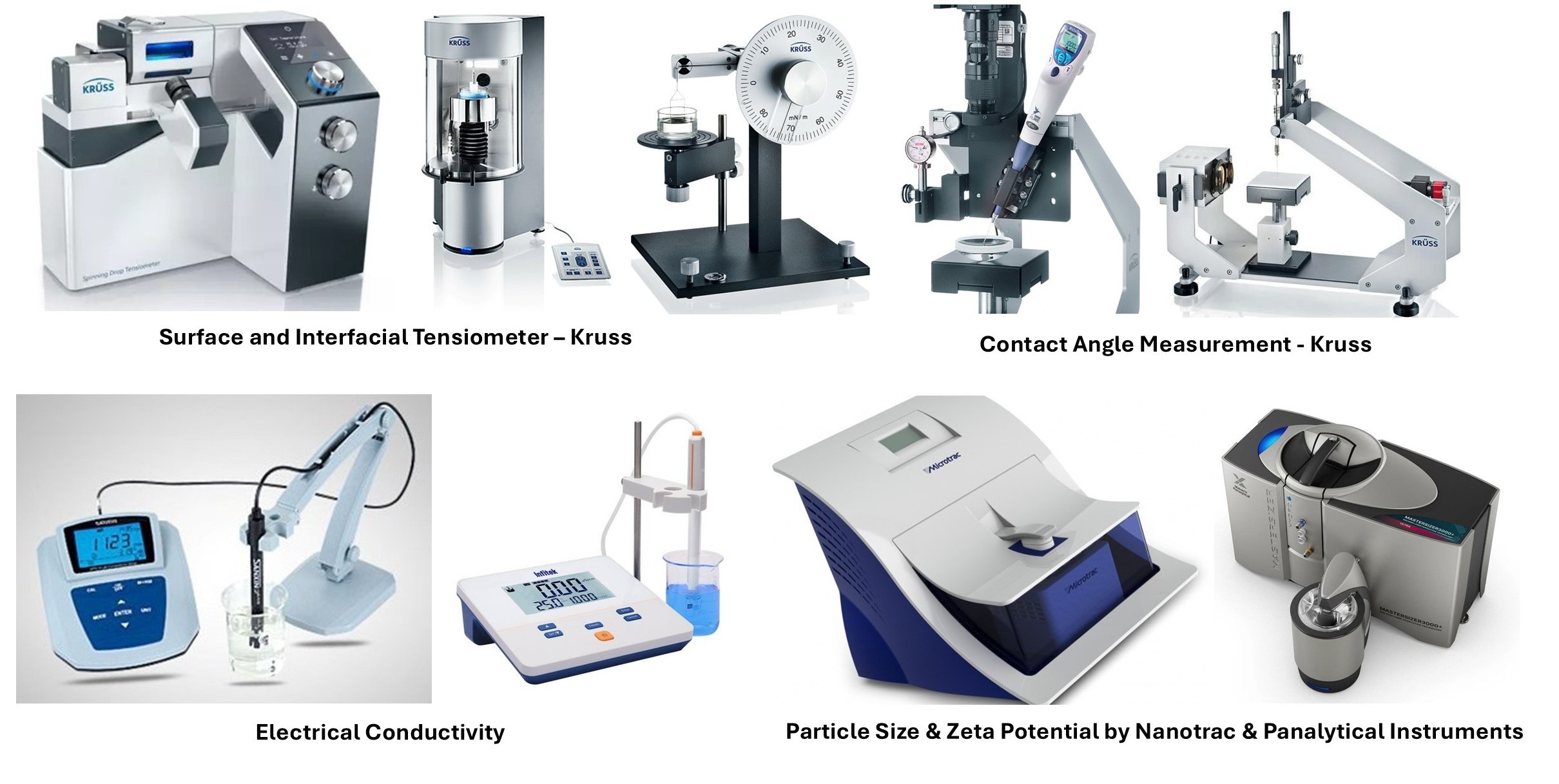
Industries served:
- Adhesives & Sealants
- Coatings & Paints
- Construction Chemicals
- Paper & Packaging
- Printing & Inks
- Textiles & Nonwovens
- Automotive & Aerospace
- Energy & Hydrogen Infrastructure
- Consumer Goods
- Biomedical & Bio-Coatings
- Polymer Films & Laminates
- Metals & Metallurgy
Applications include:
- Failure analysis
- Deformulation
- Competitive benchmarking
- Product development
- Quality troubleshooting
- Process optimization
- Sustainability & circular materials
- Clean-energy materials
- Fiber & composite innovation
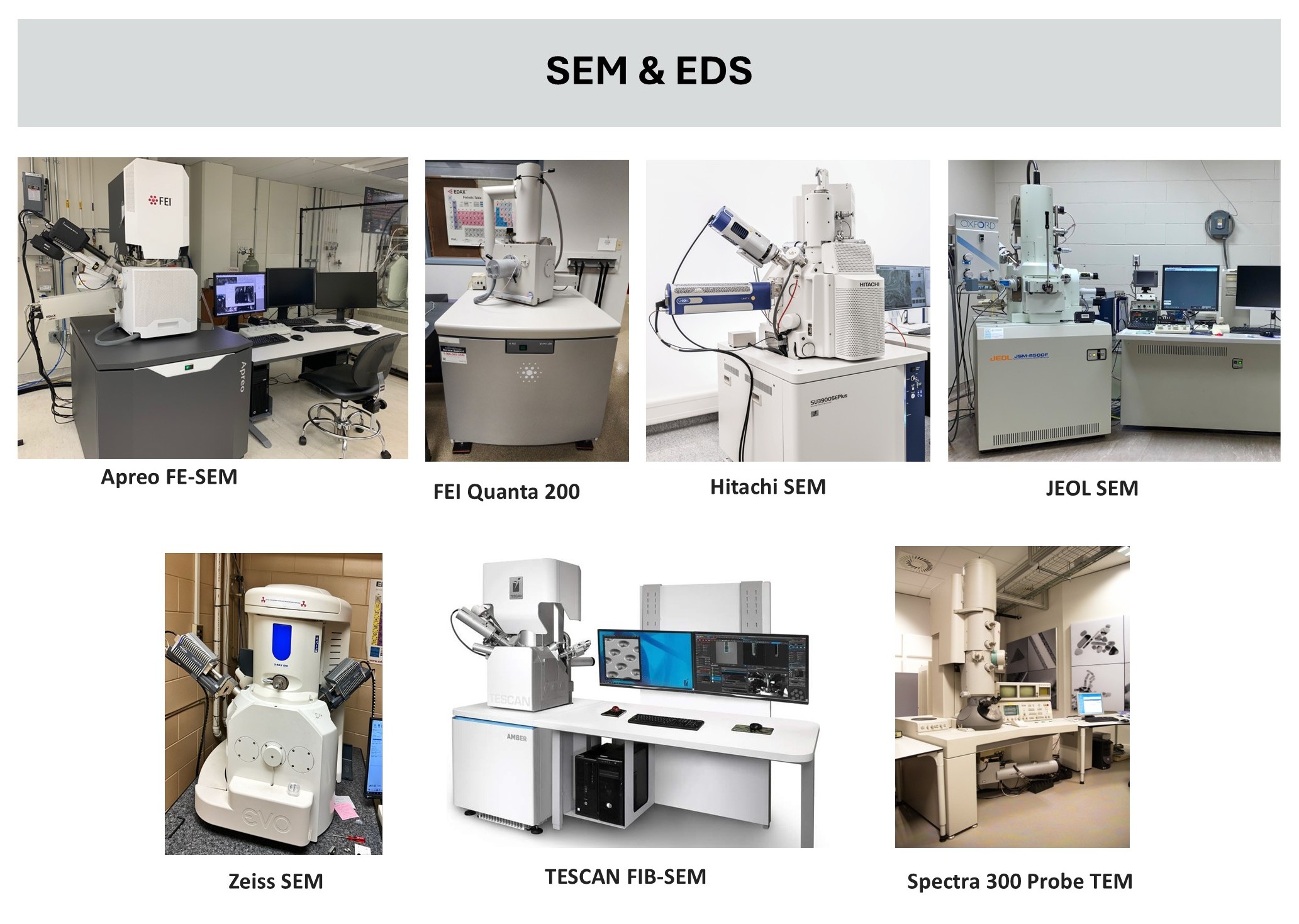
Microscopy & Imaging
“Where materials confess their secrets — one electron at a time”
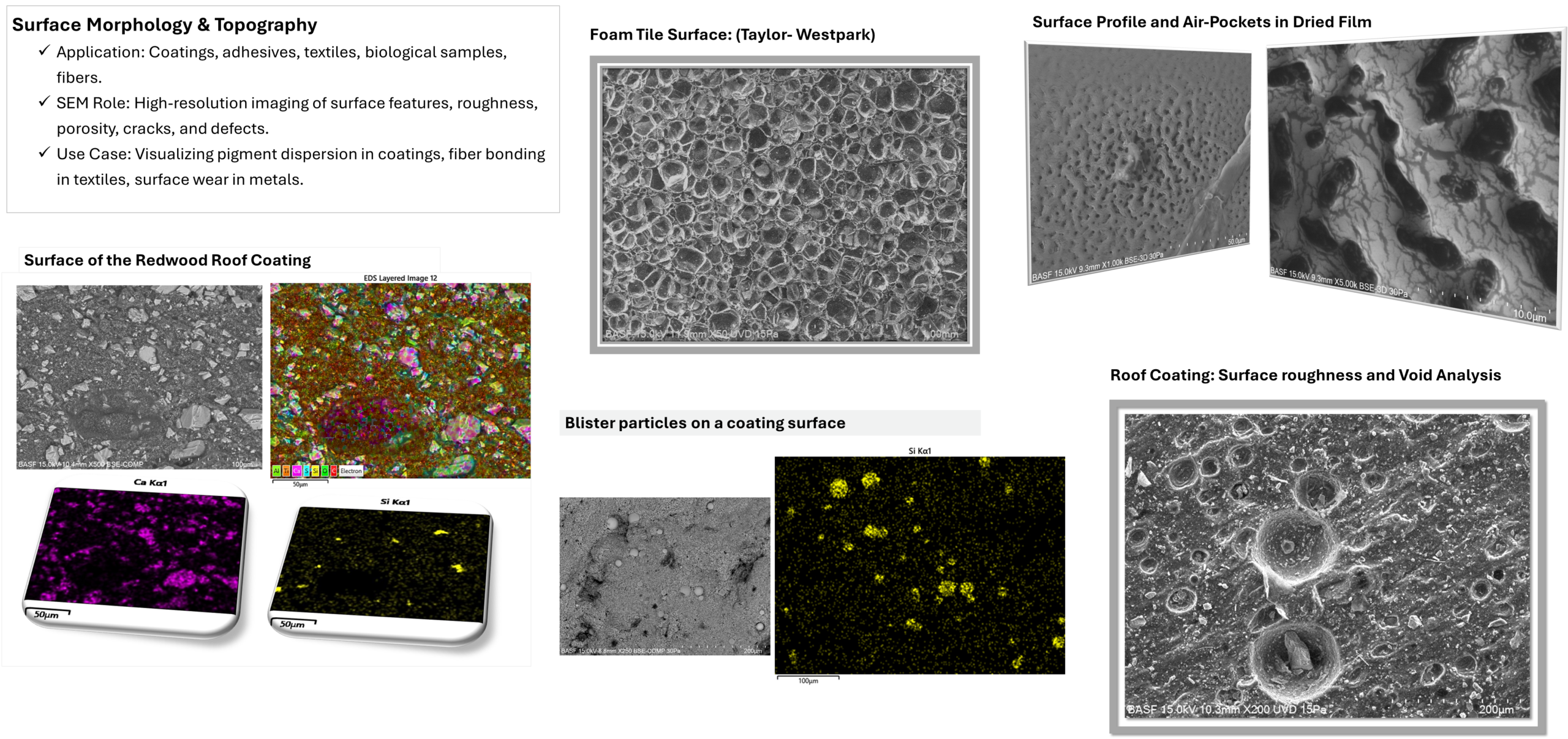
Surface Morphology & Topography
“I zoom in so close that coatings confess their secrets”
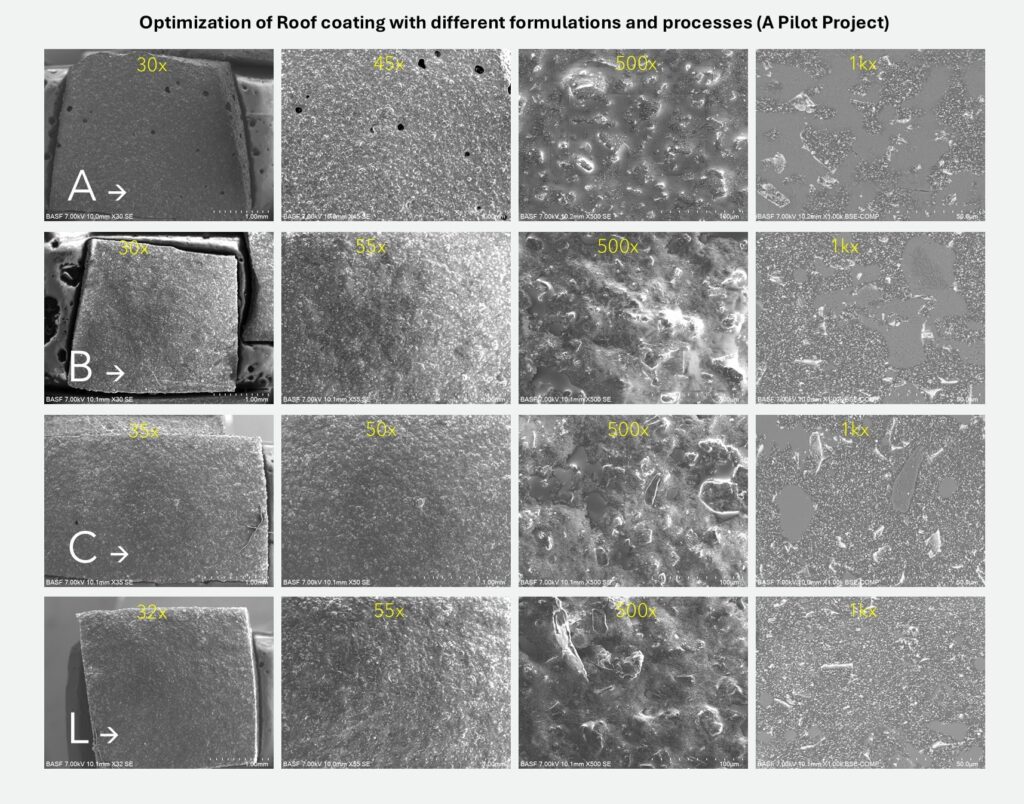
I reveal cracks, voids, pigment clumps, air pockets, and surface defects that nobody else can see — until I show them in glorious SEM detail.
Impact: Root-cause analysis for coatings, adhesives, films, fibers, or any product’s surface; formulation optimization; process troubleshooting.
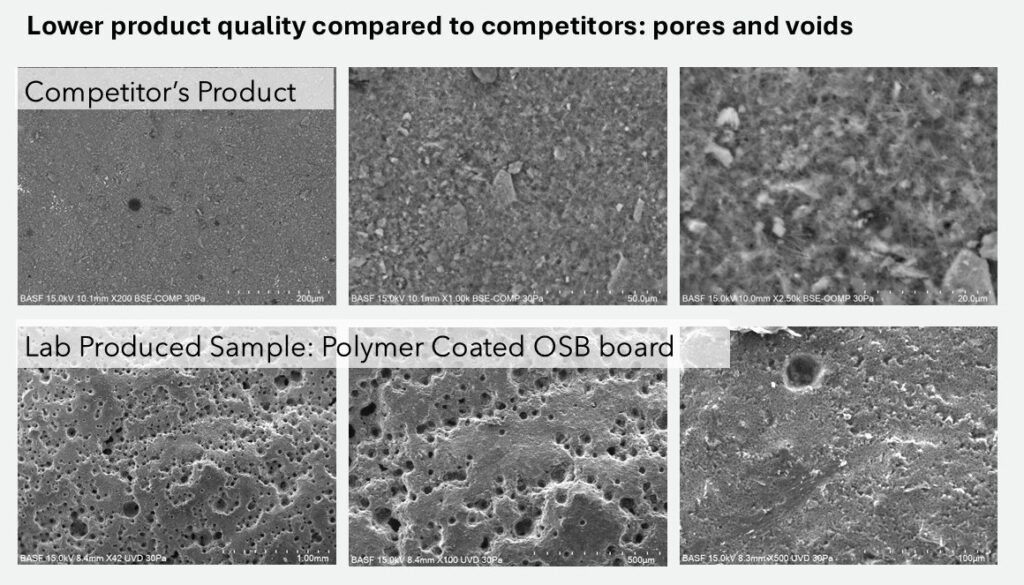
Surface Morphology & Topography Analyses of Different Products by SEM and EDS Techniques
(High‑quality images are available in my “Analytical Gallery“. Access provided upon request)
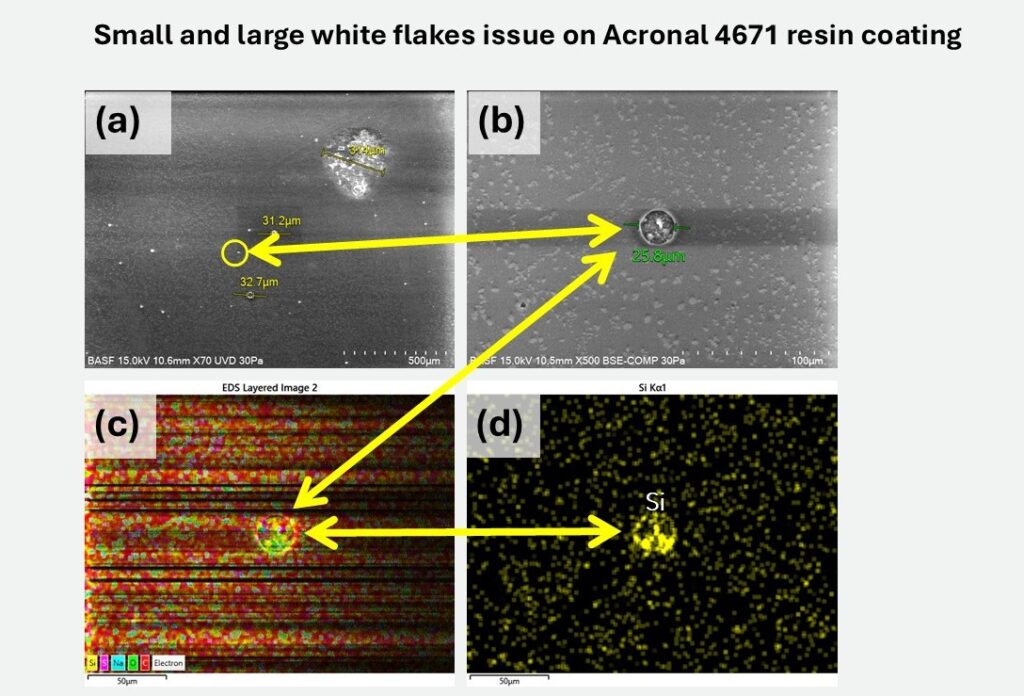
Elemental Composition (EDS) — The Chemical Truth Detector
“If something shouldn’t be there, I will find it — down to the atom”
I map elements across coatings, metals, adhesives, and contaminants.
Impact: Deformulation, contamination ID, pigment verification, competitive benchmarking.
Figure: EDS map showing Ca/Ti/Si distribution.
Cross-Sectional Analysis — The Layer-By-Layer Autopsy
“I slice materials thinner than a human hair and show what’s really happening inside”
I reveal layer thickness, adhesion quality, and interfacial bonding.
Impact: Critical for multilayer coatings, packaging, adhesives.
Figure: Cross-section of multilayer adhesive film.
Failure Analysis — The CSI of Materials Science
“When a product fails, I interrogate the fracture surface until it confesses”
I diagnose delamination, cracking, contamination, grit formation, adhesion loss, and structural failure.
Impact: Resolves customer escalations, prevents recalls, improves reliability.
Figure: SEM of delaminated coating or fractured interface.
Particle Characterization — The Micro-Particle Detective
“Pigments, fillers, dust, debris — if it’s tiny and suspicious, I’m on the case”
I analyze particle size, shape, agglomeration, and composition.
Impact: Dispersion quality, pigment optimization, contamination ID.
Figure: SEM of pigment agglomerates + EDS spectrum.
Fiber & Textile Analysis — The Microscopic Fashion Inspector
“I look at fibers so closely I can tell if they had a bad day”
I examine fiber bonding, surface treatments, coating penetration, and structural integrity.
Impact: Improves bonding, coating adhesion, durability, and performance.
Figure: SEM of fiber bonding points.
Metals & Alloys — The Microstructural Metallurgist
“I explore grain boundaries like a tourist in a microscopic city”
I analyze inclusions, carbide dispersions, fracture surfaces, corrosion products, and hydrogen-induced damage.
Impact: Alloy development, hydrogen-tolerant materials, failure prevention.
Figure: SEM fractography of hydrogen-charged steel.
Biological & Bio-Coating Analysis — The Unexpected Side Quest
“Yes, I’ve even imaged biological coatings. SEM doesn’t judge”
I evaluate porosity, mineralization, and surface texture in bio-coatings.
Impact: Supports biomedical coatings and biocompatible materials.
Figure: SEM of porous biocoating.
Contamination & Incompatibility Studies — The Corporate Crime Scene Unit
“When two materials hate each other, I figure out why”
I identify foreign particles, incompatibility, and chemical mismatches.
Impact: Reduces complaints, improves reliability, guides reformulation.
Figure: EDS map showing incompatible filler.
Deformulation & Competitive Benchmarking — The Reverse-Engineering Lab
“I take apart competitor products without ever touching a screwdriver”
I reveal structure, composition, pigment distribution, filler content, and layer architecture.
Impact: Strategic product development and innovation.
Figure: SEM cross-section + EDS maps of competitor coating.
3D Surface Metrology — The Topography Explorer
“I turn surfaces into landscapes and measure every hill and valley”
I quantify roughness, porosity, and defect morphology.
Impact: Adhesion improvement, surface engineering, coating optimization.
Figure: 3D SEM topography map.
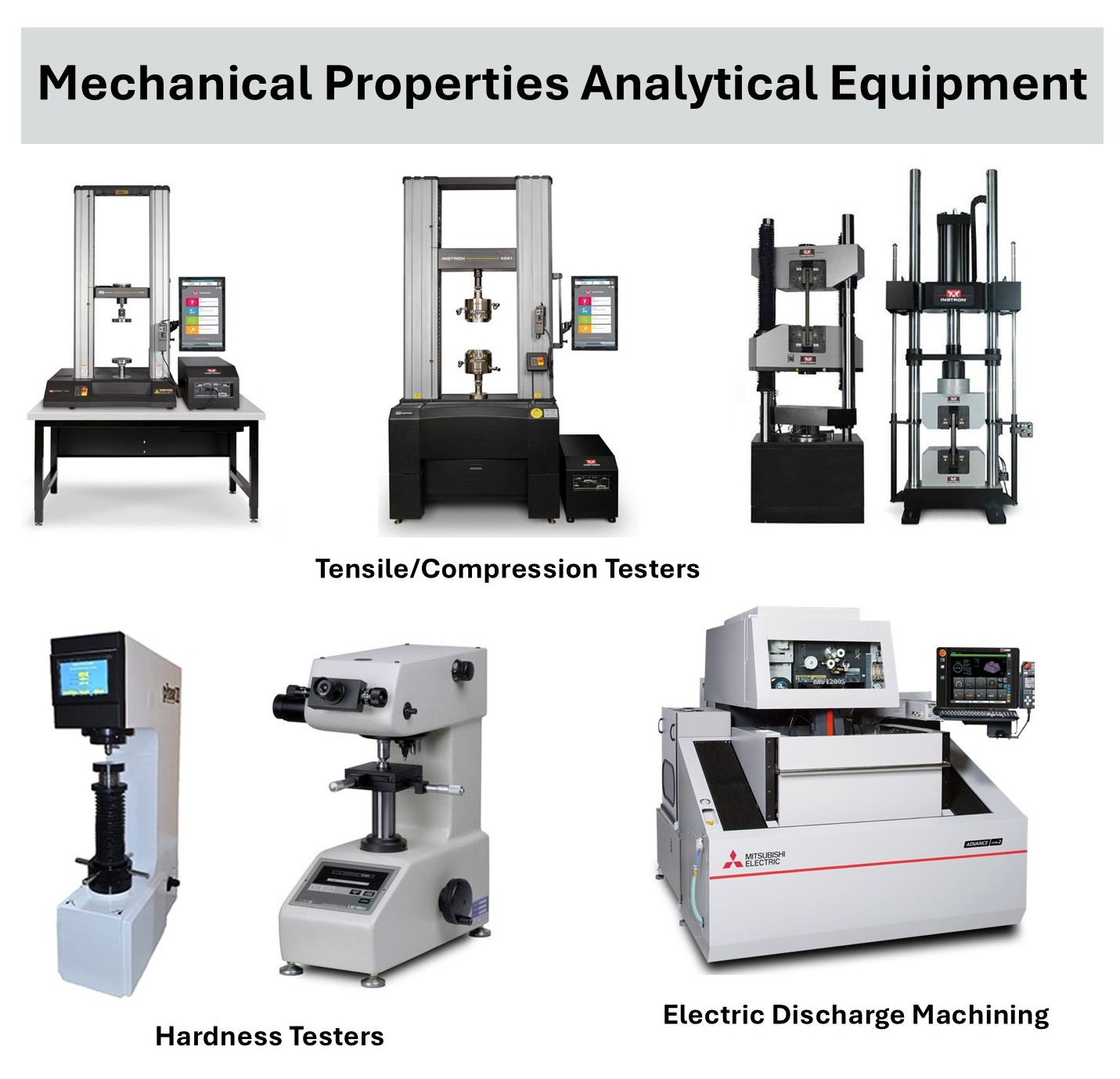
Mechanical Properties
“If it bends, breaks, stretches, tears, fatigues, or creeps — I’ve tested it”
Capabilities include:
- Tensile testing (metals, polymers, fibers, films, textiles)
- Compression & shear testing
- Flexural / bending tests
- Fatigue testing (low-cycle, high-cycle)
- Impact testing (Izod/Charpy)
- Creep & stress-relaxation
- Micro-indentation & nano-indentation
- Peel adhesion (T-peel, 180°, 90°)
- Tear strength (Elmendorf, tongue tear, trapezoid)
- Burst strength (hydraulic, pneumatic)
- Abrasion & wear testing
- Pilling resistance
- Surface tension & wetting behavior
- Fiber tensile & single-fiber mechanical testing
- Film puncture resistance
- Hardness (Shore, Rockwell, Vickers, Knoop)
Figure: Stress–strain curves, fracture surfaces, indentation impressions, fatigue crack growth images.
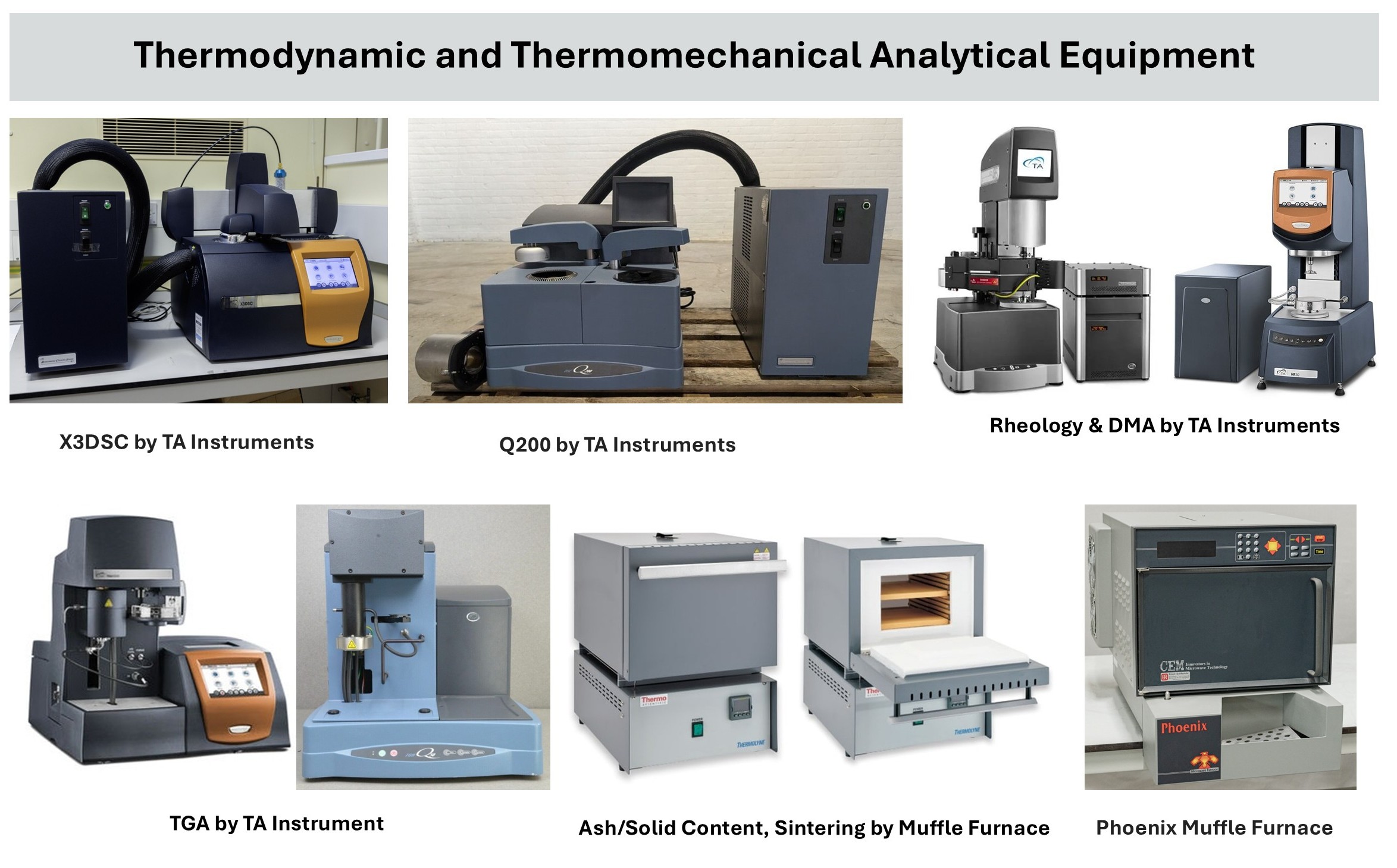
Thermal Properties
“I heat it, cool it, melt it, burn it, and watch how it behaves”
Capabilities include:
- DSC (glass transition, melting, crystallization, curing, degradation, reaction temperatures)
- DMA (modulus, damping, viscoelastic behavior)
- TGA (thermal stability, decomposition)
- Rheology (viscosity, shear thinning, curing kinetics)
- TMA (thermal expansion, softening point)
- Thermal conductivity & diffusivity
- Ash content & solid content
- Moisture absorption & desorption
- Thermal cycling & environmental chamber testing
- Thermogravimetric oxidation studies
- Thermal aging of polymers, fibers, and coatings
Figure: DSC curves, DMA modulus vs. temperature, TGA weight-loss curves.
Physical Properties
“The everyday behaviors that materials hide until I measure them”
Capabilities include:
- Density & specific gravity
- Porosity & pore size distribution
- Surface roughness (Ra, Rz)
- Gloss, haze, and optical clarity
- Colorimetry (CIELAB, whiteness, yellowness)
- Moisture content & regain
- Air permeability (textiles, nonwovens)
- Water absorption, wicking, and repellency
- Film thickness & uniformity
- Coating weight & pick-up
- Fiber fineness & crimp
- Fabric stiffness, drape, and handle
- Dimensional stability & shrinkage
- Surface energy & contact angle
- Permeability (gas, vapor, liquid)
Figure: Color maps, porosity images, roughness profiles, drape curves.
Chemical & Spectroscopic Analysis
“The molecular detective squad”
Capabilities include:
- EDS (elemental composition)
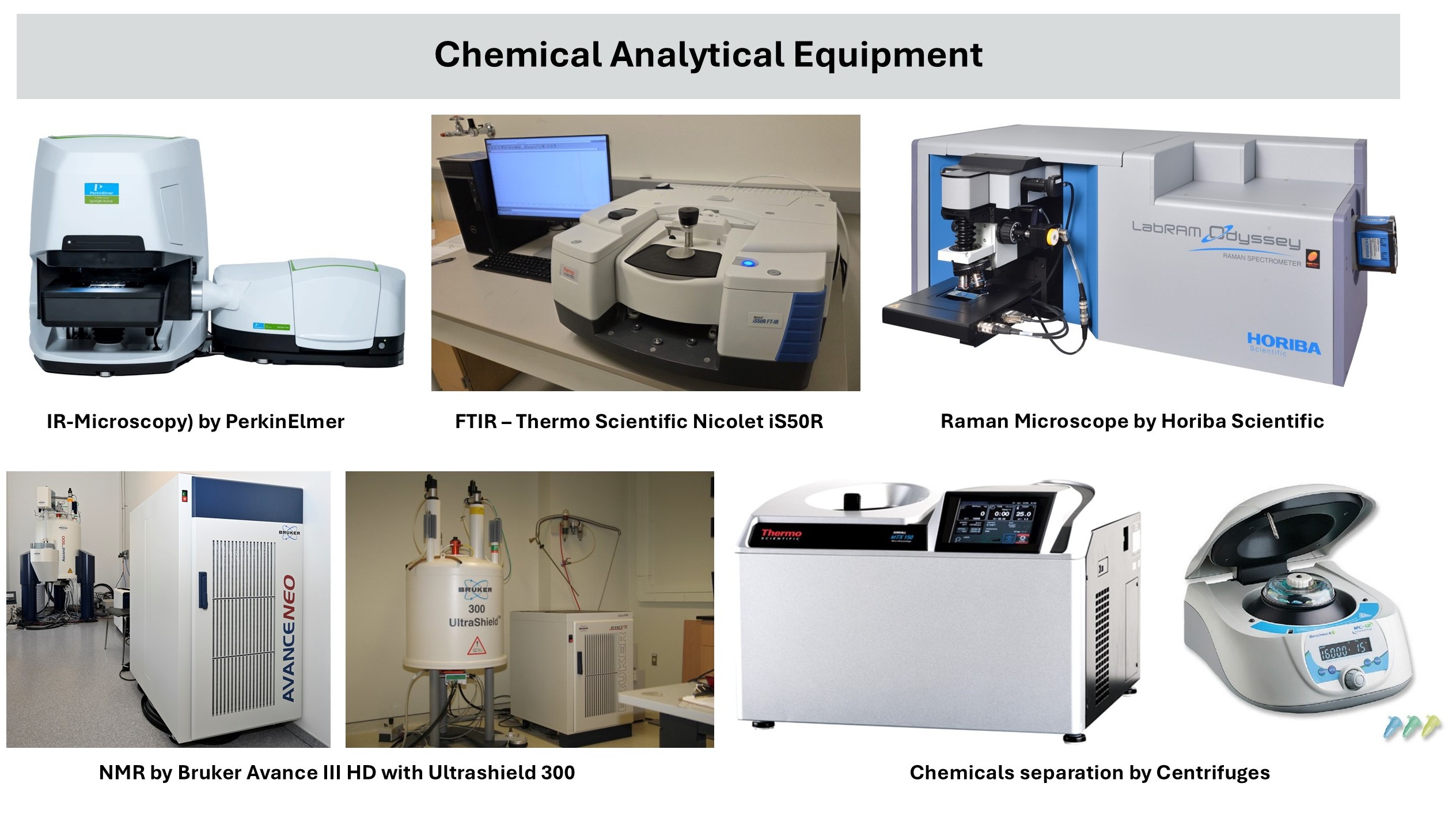
- FTIR (functional groups, polymer ID)
- Raman spectroscopy (crystallinity, molecular structure)
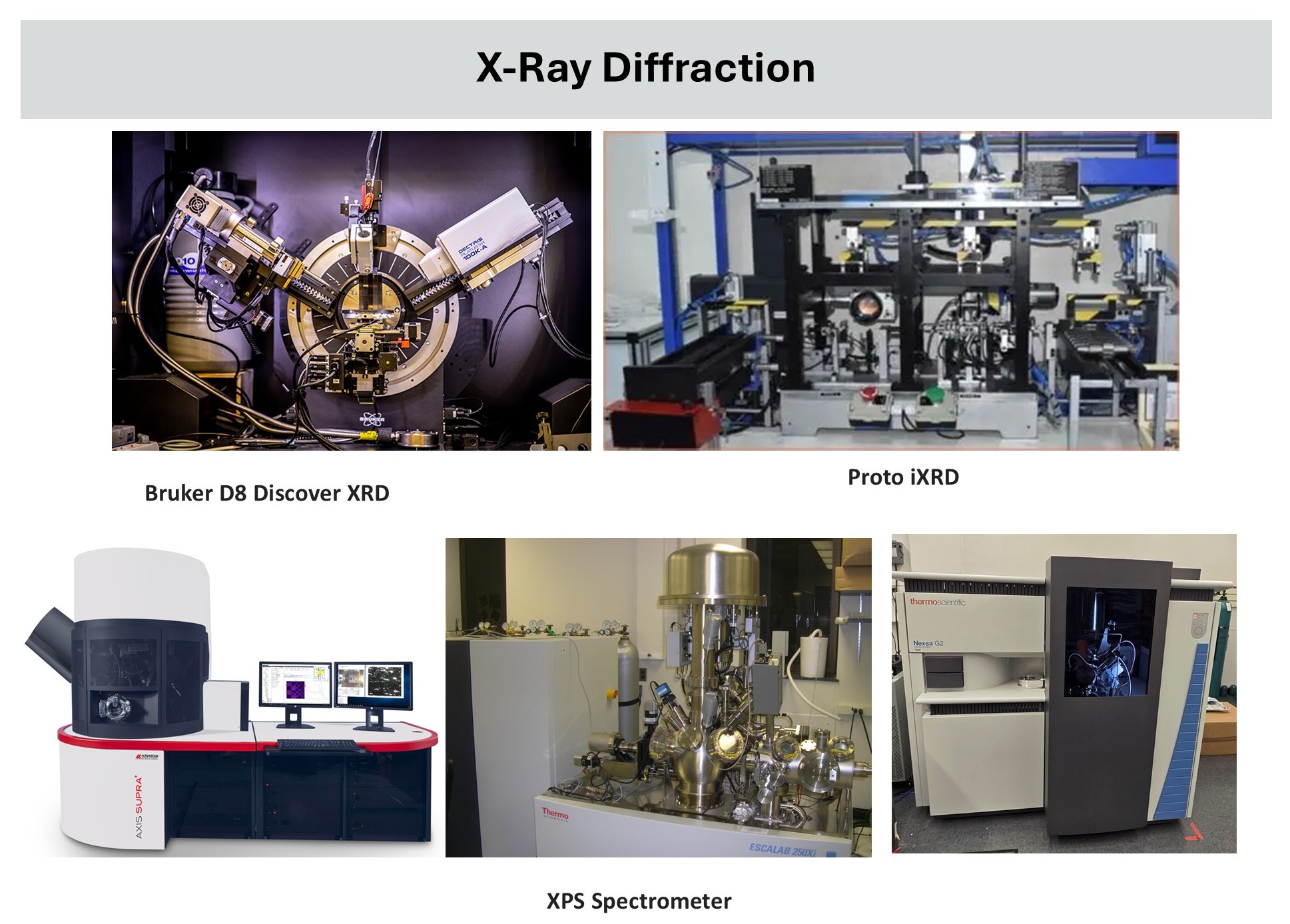
- XPS (surface chemistry, oxidation states)
- Micro-IR (localized chemical mapping)
- XRD (crystallinity, phase identification)
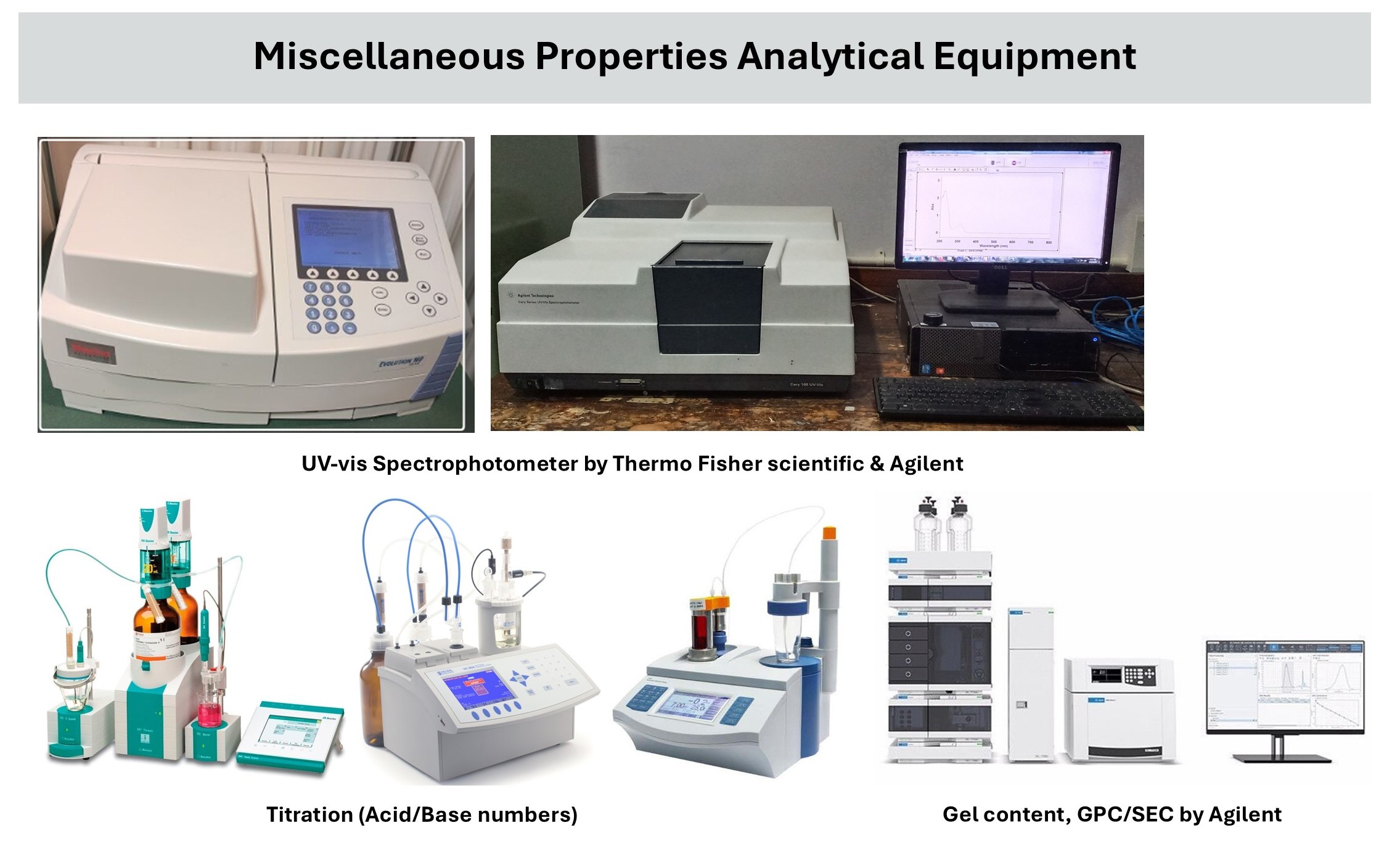
- UV-Vis (optical properties, colorants, absorbance)
- pH, titration, and wet-chemistry analysis
- Solvent extraction & residue analysis
- Chemical compatibility & degradation studies
- Oxidation, corrosion, and chemical aging
- Biocide/antibacterial activity testing
Figure: FTIR overlays, Raman spectra, XRD diffractograms, XPS peak fits.
Advanced Analytical Techniques & Instrumentation
“The bonus round — where the fancy instruments live”
Capabilities include:
- Particle Size Analyzers (laser diffraction, DLS)
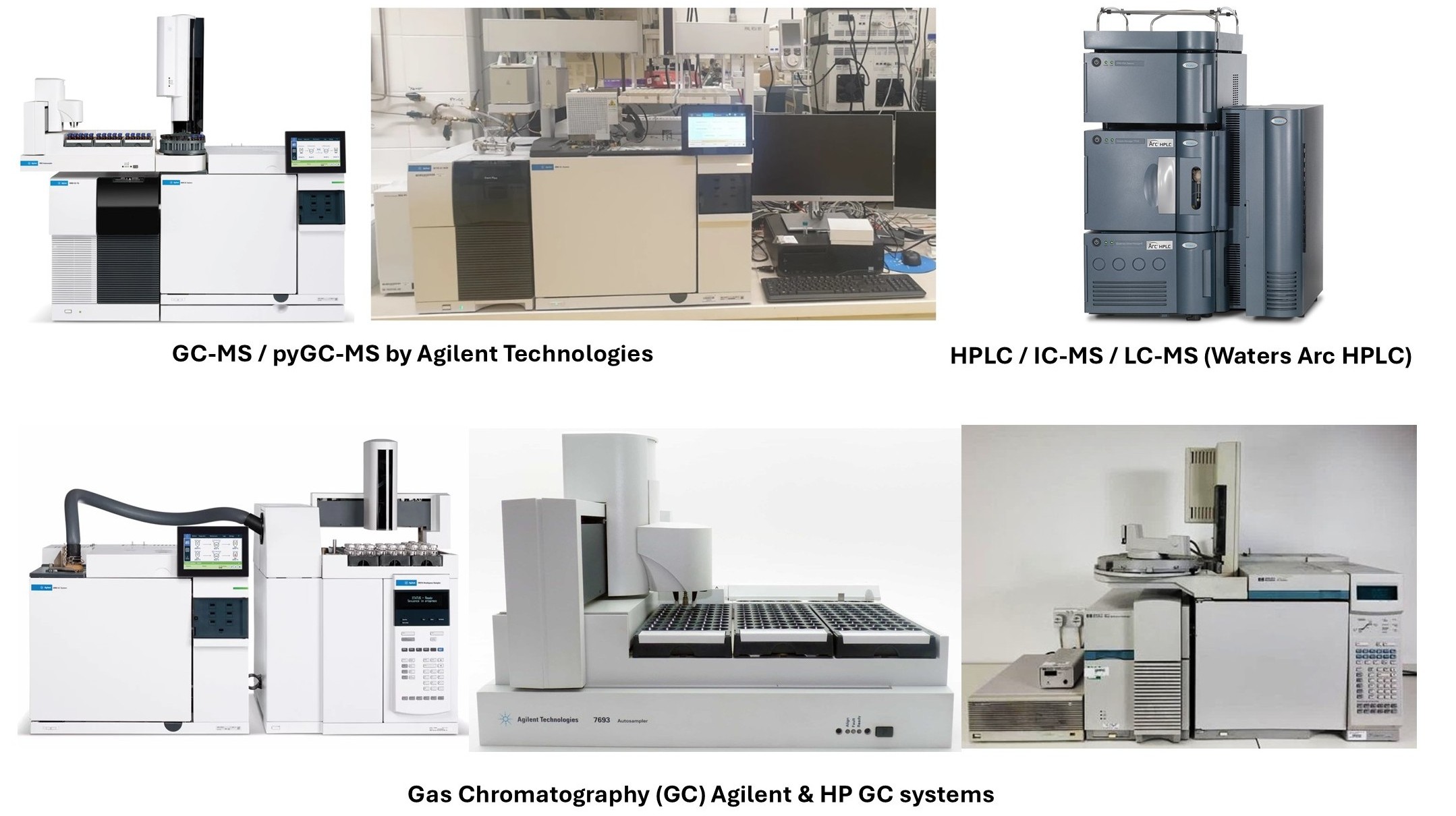
- GC, GC-MS, LC-MS, py-GC
- NMR (collaboration-based)
- GPC (molecular weight distribution)
- Rheometers (rotational, oscillatory)
- Environmental SEM
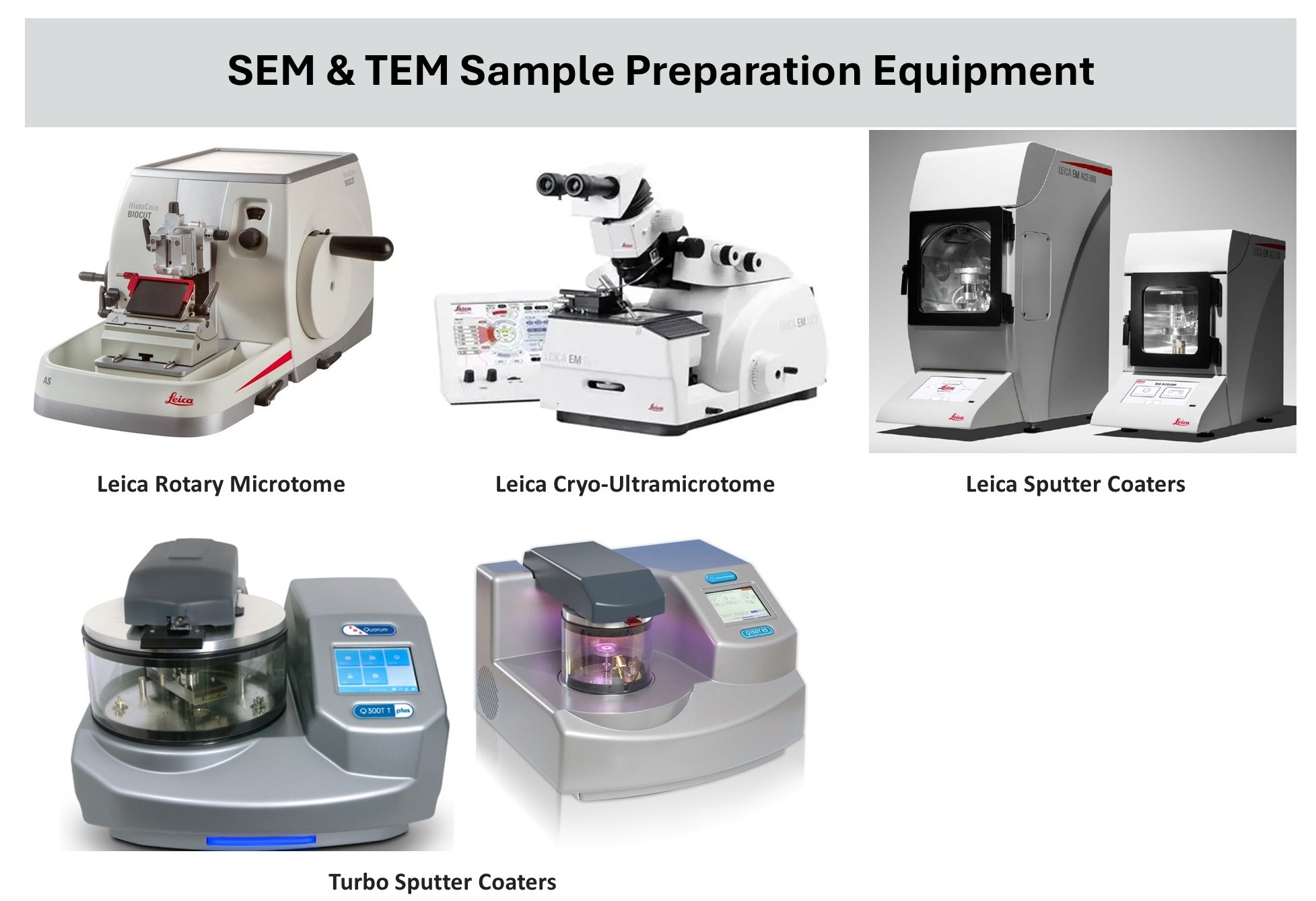
- Cryo-microtoming & staining (Ru/Os)
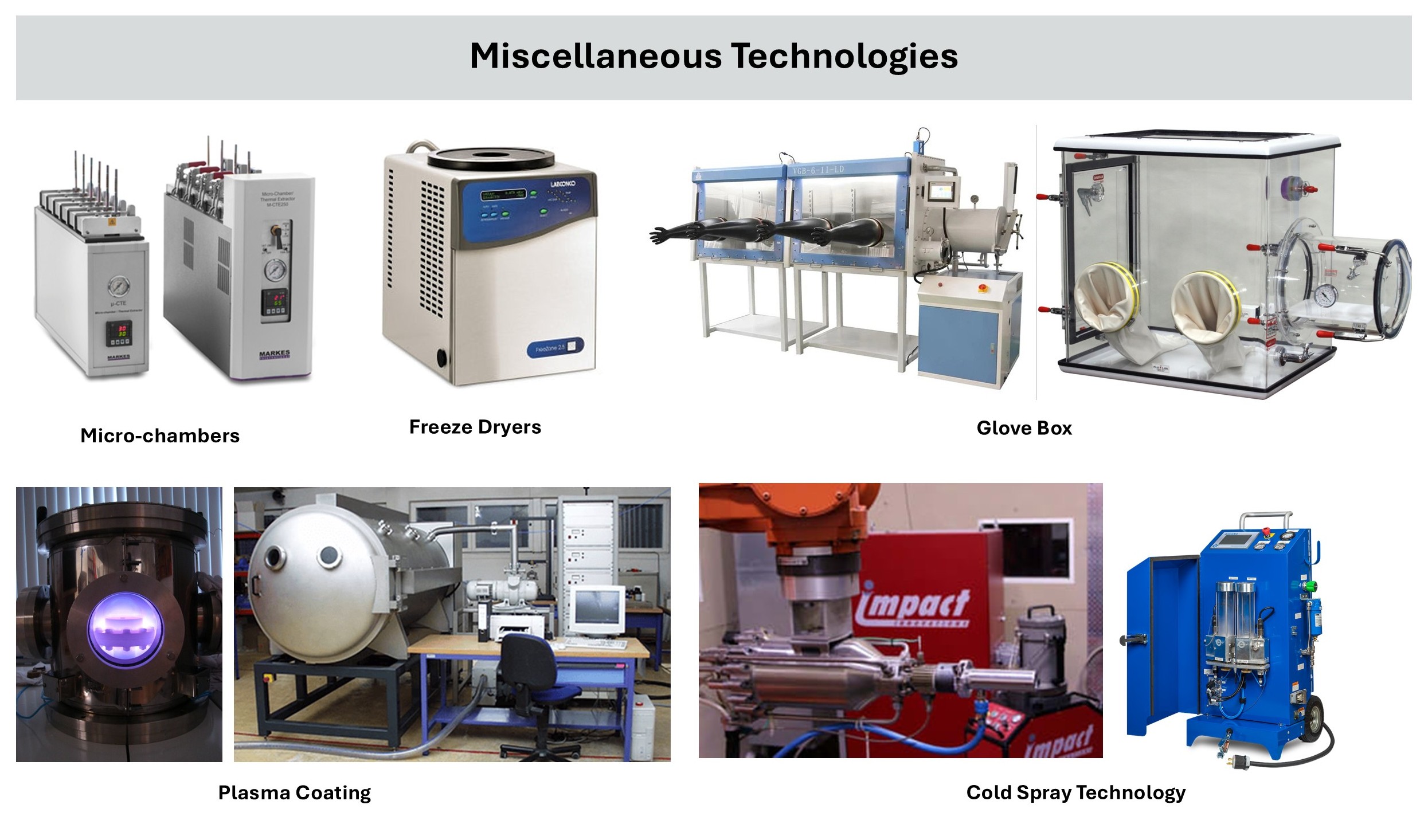
- Sputter coating, plasma coating, laser coating
- Electric Discharge Machining (EDM)
- AES (Auger electron spectroscopy)
- UV-Vis-NIR spectroscopy
- Thermal chambers & environmental conditioning
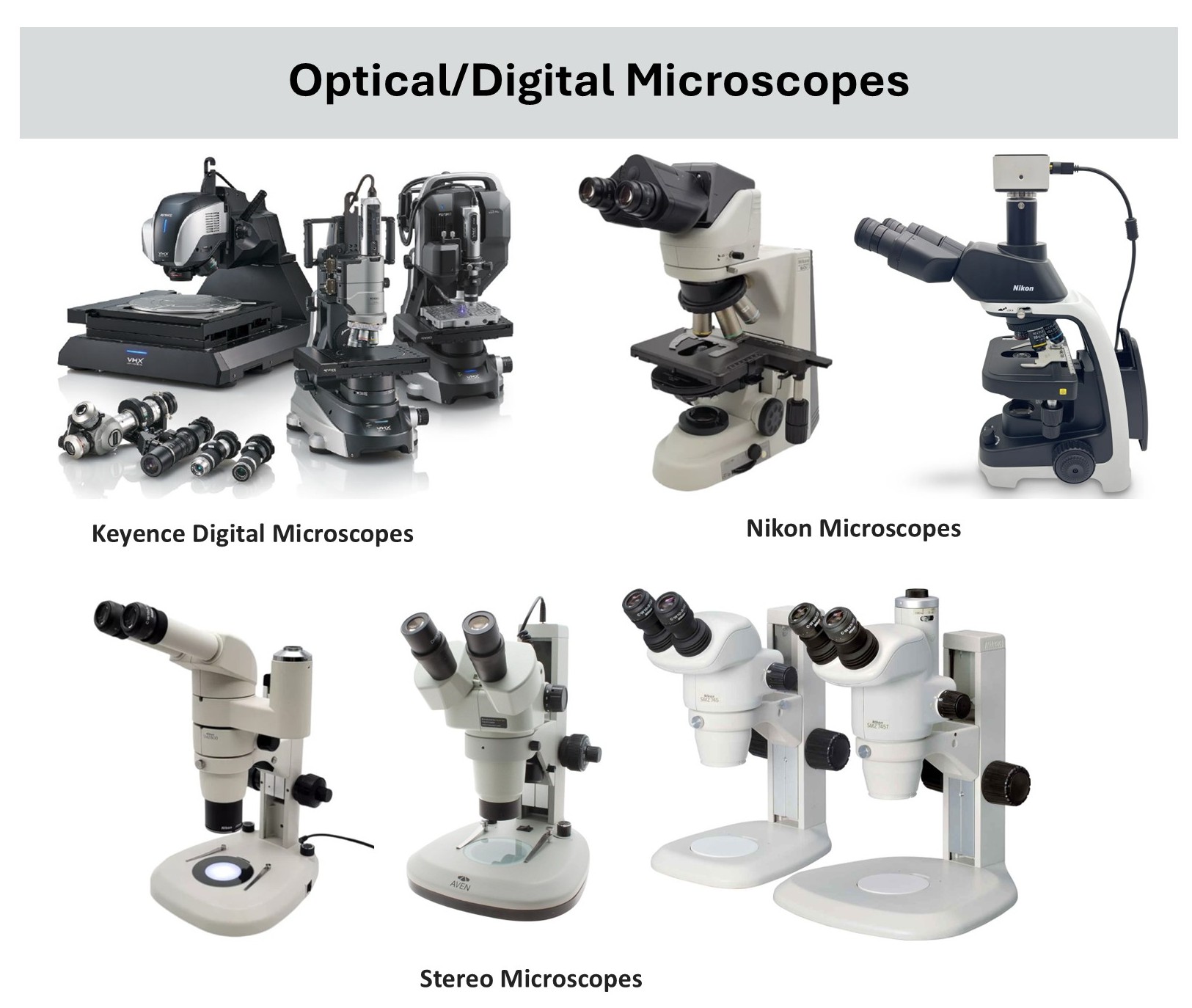
- High-resolution optical microscopy (brightfield, polarized, DIC)
Figure: Chromatograms, particle size distributions, GPC curves.
Software, Data, and Computational Tools
“Because data doesn’t interpret itself — yet”
Tools used for analysis, modeling, and visualization:
- MATLAB
- OriginPro
- Minitab
- SPSS
- Python (NumPy, Pandas, Matplotlib)
- SolidWorks & AutoCAD (for modeling and product design)
- ImageJ / FIJI
- Microsoft Power BI
- Adobe Illustrator & Photoshop (for scientific figure creation)
- SQL & Java (data handling and automation)
- Enterprise-level Microsoft 365 & Power Platform
Figure: Data dashboards, PCA plots, automated analysis workflows.
Closing Comment
“Whether it cracks, melts, delaminates, degrades, absorbs moisture, grows crystals, forms blisters, or simply misbehaves — I can analyze it, explain it, and help fix it.”
